
Identify the gaps. Then what?
When you identify the gaps, you can target the learning
Progress comes from precisely targeting gaps. Here we share an easy way to find out what children already know and tried and tested ways to fill the gaps in times table knowledge.
FREE resources to identify the gaps in your students’ knowledge of core multiplication facts
FOUR pathways for students with different levels of fact recall
“I have tried the audit and it was amazing.”
Rachel Veeranna,
Maths Hub Intervention Teacher,
Bristol Metropolitan Academy
Step 1: Run the audit powerpoint
The audit includes:
38 core multiplication facts
2 concept-check questions
Children answer on coded answer sheets to help you analyse scores.
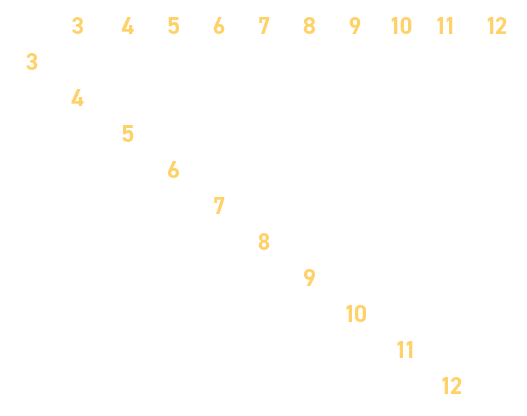
Step 2: Analysing results
Once you have marked the answer papers, use your knowledge of your students and the guidelines below to decide on each child’s pathway.
Full marks: Pathway 1
Score 39 - 30: Pathway 2
Score 29 - 11: Pathway 3
Score 10 - 0: Pathway 4
Please note, these scores are only guidelines. Use your knowledge of your students to decide the right next step. Scroll down to find the pathways.
60-70% of marks on a Maths GCSE paper involve multiplication or multiplicative thinking
Step 3: Making it happen
This is the hardest bit in a busy classroom. Take a look at our peer mentoring page to see how you can harness the energy of other students to deliver high quality intervention to those who need support.
To see change you will need to allocate time consistently so children get the practice they need. Aim for 10 minutes a day.
Investing time to develop multiplicative fluency for ALL children is critical to their success in and enjoyment of maths.
If multiplicative understanding is not embedded, then progress in maths will be limited. A significant amount of maths in KS2 and beyond depends on the ability to think and reason multiplicatively.
NCETM, Introducing Multiplicative Thinking
Pathway 1: applied times table testing
Children with strong multiplication fact recall can move on from simple multiplication tests to exercises which test facts in applied contexts:
Division
Simplifying fractions
Fractions of a quantity
Area and volume
Be aware that students can score full marks, and not have secure conceptual understanding. Continue to explore and expose multiplicative structures in main maths lessons asking children in this group to verbalise the meaning of factors and products in multiplication and division equations. If there are insecurities, introduce Five Dice to secure concept (see below).
Children with strong multiplication fact recall may benefit hugely from working as a maths mentor, supporting other students on Pathways 2 - 4.

Pathway 2: Concept flashcards
Model how to create a concept flashcard for each fact students got wrong.
Write the product on one side.
On the other side, write the multiplication expression at the top, draw a line, and underneath add a simple strategy to help recall it.
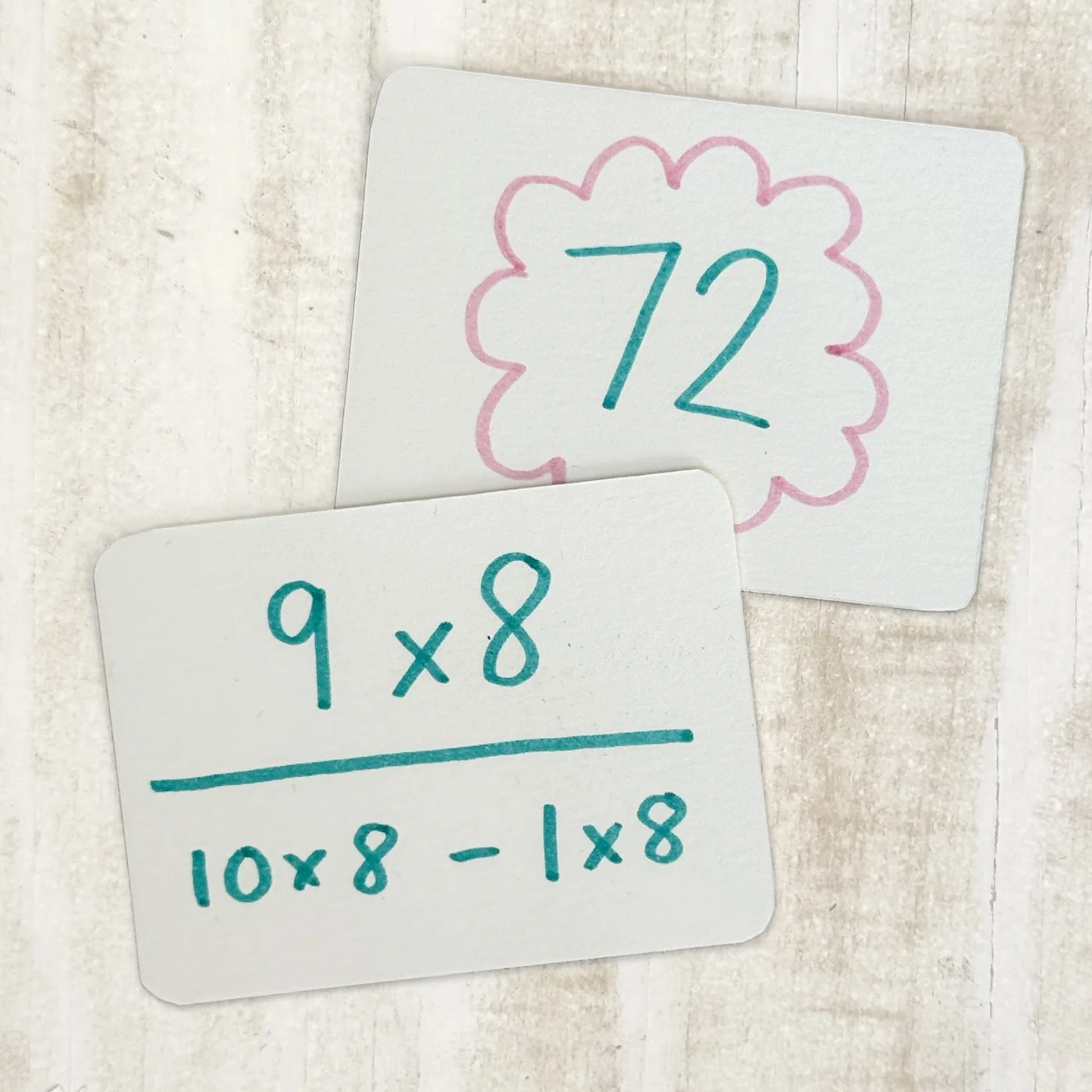
This exercise can be done whole class. Put a multiplication expression on the board and ask children to share ideas for how this fact could be derived from a fact they already know.
6 x 7 = (3 x 7) + (3 x 7) = 42
9 x 6 = (10 x 6) - (1 x 6) = 54
Allow your class to put forward lots of different ideas for any facts which students on Pathway 2 need to learn. Sharing ideas whole class will expose the underlying structures for ALL.
After each discussion, Pathway 2 students choose one strategy for their concept card for each fact they need to target.
Once students have created their concept flashcards, they need to work with a partner at least 3 times a week to revisit the flashcards. The partner should hold the flashcards and ask the multiplication questions. In reply the student should explain the strategy first and then give the answer. The focus should be to practise the strategy, rather than parrot an answer by rote.
Over time, the strategy will be recalled at speed and the answer too. But the answer will no longer be a fragile memory of a meaningless soundbite; it will be a secure fact embedded in concept.
Pathway 3: FunKey Five Steps
For students who scored less than 30, there are likely to be one or more times tables which are weaker than others. If you have used the colour coded audit sheet, you will be able to spot the weaker times tables more easily.
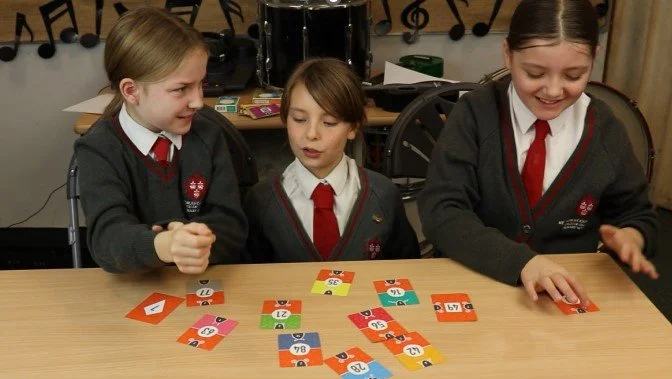
We suggest using the FunKey Five Steps as a targeted intervention to learn a whole times table. The Five Steps program can be used in adult-led intervention, at home with parents/carers and also in a peer mentoring programme. The critical thing is that children in the Five Step program do at least 10 minutes, three times a week until the times table is secure.
It is likely that many children on this pathway have a weak grasp of multiplicative structures. They may also benefit from regularly playing Five Dice.
Pathway 4: Play Five Dice
Children who scored less than 10 need to secure conceptual understanding of what times tables represent. This is achieved by playing Five Dice regularly and focusing clearly on the use of precise and accurate mathematical language to describe the dice patterns.
Click here to find out how to play and to download the FREE score sheet.